
If content velocity is your bottleneck, AI can turn it into your competitive advantage. The right content automation tools help you plan, create, optimize, and ship high-quality assets at scale—without sacrificing accuracy or brand voice.
In this guide you’ll get: a 2026 snapshot of content automation, a practical buying checklist, 25 content types you can automate today, governance and QA workflows, SEO ROI prioritization, KPIs, where SEOsolved fits, a 90‑day rollout plan, and pitfalls to avoid.
What Are Content Automation Tools? (2026 Snapshot)
Definition: Content automation tools are AI-powered systems that plan, generate, optimize, and distribute content across channels using repeatable workflows, source-grounding, and performance feedback.
Modern solutions combine AI writing with ai content management—templating, approvals, brand voice, and analytics. They can draft SEO articles, adapt copy for social and email, and repurpose transcripts into summaries. According to industry roundups, AI tools already help teams generate, optimize, and organize content by analyzing patterns and prompts to produce assets faster across text, visuals, and structure. They’re also increasingly multimodal, generating complementary visuals, short videos, and even voiceovers—synced to campaign goals by 2026.
Why now? Data shows AI has crossed the adoption chasm: 93% of brands use AI to create content faster; 90% for planning; 81% to extract insights, and over two‑thirds say it frees them for creative work. Next, expect AI to measure and improve content in real time—rewriting headlines, adjusting visuals, or tweaking CTAs based on engagement and conversion signals.
Key benefits: scale content production, reduce time-to-publish, maintain consistency, and lift SEO performance.
Core capabilities: SERP and competitor analysis, topic clustering, brand voice controls, structured data outputs, and channel-specific variants.
Outcomes: more rankings, better CTRs, and higher conversion rates with less manual effort.
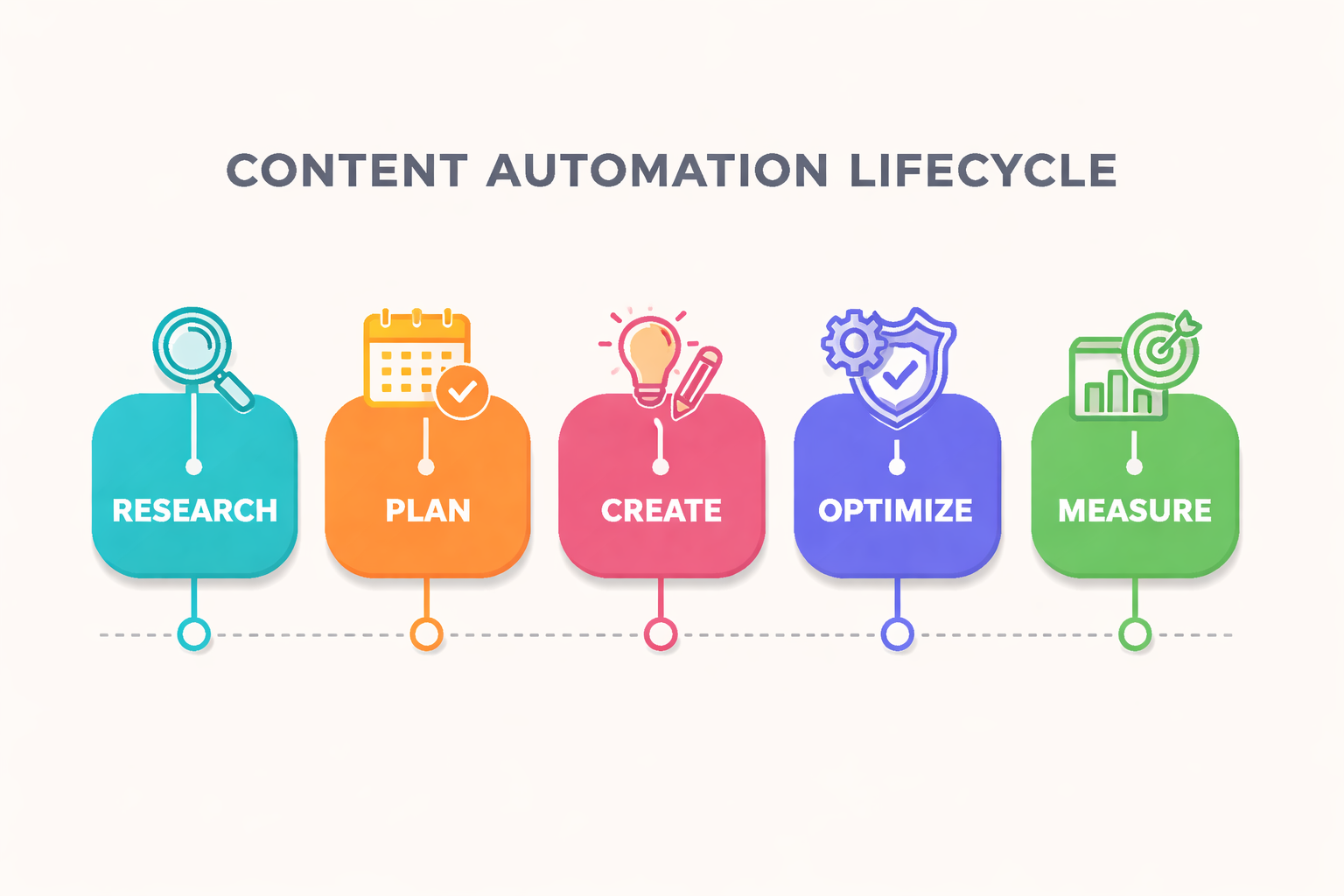
How to Choose Content Automation Tools (Evaluation Criteria)
Use this buyer’s checklist to compare content automation tools for U.S.-based teams. Prioritize SEO features, source grounding, governance, and total cost.
SEO intelligence: SERP analysis, topic clusters, and content gap detection to build a winning plan.
Source grounding: citations, linkable references, and controls to reduce hallucinations.
Brand voice: reusable tone/style profiles with guardrails for regulated language.
Workflow automation: briefs, drafts, approvals, versioning, and scheduled publishing.
Structured outputs: schema-ready FAQs/HowTo, metadata fields, and internal link recommendations.
Governance & security: RBAC, SSO/SAML, audit logs, and data residency when required.
Human-in-the-loop: built-in review steps, plagiarism checks, and fact-check prompts.
Measurement: rank tracking, CTR, engagement depth, and conversion attribution.
Cost & scalability: predictable pricing, multi-seat support, and API access.
Time-to-value: fast setup, templates, and onboarding resources.
Quick comparison of common approaches:
Approach | Best for | Setup | Governance/Security | Trade-offs |
|---|---|---|---|---|
No‑code automations | SMBs, marketers | Minutes | Limited privacy controls | Predefined modules; minimal customization |
Enterprise AI platforms | Mid‑market/enterprise | Weeks | RBAC, SSO/SAML, audit logs, private networking | Higher cost; requires admin |
AI SEO specialists | SEO‑led growth | Days | Editorial workflows; source citations | Narrower focus; excels at ranking content |
Related reads: see how to scale with Automated Content Creation and build your roadmap with AI SEO Strategy.
25 Types of Content You Can Automate with AI
Below are high‑impact AI content types you can automate safely today. Start with search‑led assets to capture intent, then expand to lifecycle and support content.
1) SEO Blog Posts and Articles
Generate long‑form content from keywords, SERP analysis, and competitor gaps. Use topic briefs and outlines to ensure structure and depth. Automate internal links and metadata to accelerate organic growth without sacrificing quality.
2) Product Descriptions for E‑commerce
Produce unique, benefit‑first copy at SKU level. Include specs, size guides, and comparison highlights. Automate variants for color/size and embed FAQs to lift conversion and indexable depth.
3) Category and Collection Page Copy
Draft thematic intros that reinforce topical relevance, include semantic FAQs, and add internal link modules to cornerstone content. Helps search engines map your catalog.
4) Programmatic SEO Pages (Location/Service Variants)
Safely scale long‑tail pages by merging structured inputs (city, service, pricing) into unique, human‑sounding templates. Layer in local proof and citations to maintain originality.
5) Landing Page Sections and Value Propositions
Automate hero copy, features, benefits, social proof, and CTAs. Generate segment‑specific versions for A/B tests to find the highest‑converting angle fast.
6) How‑To Guides and Tutorials
Create step‑by‑steps with prerequisites, time estimates, and troubleshooting tips. Ideal for help content and top‑of‑funnel education.
7) FAQs and Answer Boxes
Turn user queries into concise answers optimized for featured snippets and zero‑click SEO. Export as on‑page modules or schema‑ready text.
8) Knowledge Base and Help Center Articles
Convert support tickets and chat logs into standardized help docs. Improve deflection, reduce ticket volume, and keep tone consistent.
9) Comparison Pages (X vs. Y)
Automate fair, structured comparisons that address evaluation intent. Include use‑case fit, pricing transparency, and pros/cons without bias.
10) Case Study Drafts and Templates
Assemble “challenge, solution, results” frameworks from notes, screenshots, and quotes. Add standardized metrics sections for credibility.
11) Press Releases
Generate wire‑style drafts with dateline, boilerplate, quotes, and media contact details. Conform to PR best practices while saving hours.
12) Email Newsletters
Produce curated roundups and editorial letters with consistent voice and layout sections. Pull from recent posts and industry news.
13) Lifecycle Email Sequences
Automate welcome, onboarding, upsell, and reactivation flows. Personalize by behavior or plan tier to lift retention and LTV.
14) Social Media Posts (LinkedIn, X, Facebook, Instagram)
Repurpose articles into platform‑specific hooks, captions, and carousels. Schedule variations to learn what resonates by channel.
15) Short‑Form Video Scripts and Hooks
Generate tight scripts, pattern‑interrupt hooks, and CTAs for Reels, Shorts, and TikTok. Keep shots list and timing concise.
16) YouTube Descriptions and Timestamps
Automate keyword‑rich descriptions, chapters, and links. Improves video SEO and watch‑time through better navigation.
17) Podcast Show Notes and Episode Summaries
Transform transcripts into summaries, quotes, key takeaways, and resources. Publish quickly while maintaining editorial quality.
18) Ad Copy (Search, Social, Display)
Generate headline/description variants at scale for rapid testing. Align messages to audience pain points and match landing pages.
19) Meta Titles, Descriptions, and H1s
Automate metadata across templates to improve CTR and relevance. Enforce length, keyword placement, and tone rules.
20) Schema‑Friendly FAQs and HowTo Content
Produce markup‑ready text aligned with structured data guidelines for richer SERP features and potential higher CTR.
21) Topic Briefs and Outlines for Writers
Generate briefs with headings, angle, talking points, and sources so experts can draft faster. Reduces back‑and‑forth and ensures depth.
22) Content Summaries and TL;DRs
Compress long pieces into executive summaries. Perfect for stakeholder alignment and quick enablement.
23) Whitepapers and eBooks (First Drafts)
Turn research notes into structured long‑form drafts ready for SME polish and design. Maintain consistent flow and citation placeholders.
24) Support Macros and Canned Responses
Build consistent, on‑brand replies that reflect policies and tone. Cut response times while increasing CSAT.
25) UGC Prompts and Review Responses
Automate prompts that elicit specific, useful reviews. Draft public replies that reinforce brand values and address concerns.
Deep dive next: learn how to brief AI for maximum rankings in AI Content Brief Mastery.
AI Content Management: Workflows, Governance, and Brand Voice
Effective ai content management hinges on repeatable processes and clear guardrails.
Editorial workflow: intake → brief → draft → SME review → SEO QA → legal/compliance → publish.
Style & tone: document voice pillars, banned phrases, and reading level; codify examples.
Source policy: require citations for data claims and use linkable, reputable sources.
Templates: standardized outlines for blog posts, case studies, and support docs.
Access & audit: role‑based permissions, immutable version history, and review sign‑offs.
Human-in-the-Loop Quality Control
Before publishing, apply this review flow for accuracy, originality, and E‑E‑A‑T.
Fact check: verify stats, quotes, and dates; add or update citations.
Bias and safety check: inspect for sensitive claims; ensure neutral, inclusive language.
Originality check: scan for duplication; rewrite generic passages.
SEO QA: validate search intent, headings, internal links, and metadata.
Brand QA: align tone and terminology to the style guide.
Final approval: sign‑off recorded with reviewer and timestamp.
For hands‑on techniques to scale safely, see our AI writing tools buyer’s guide.
SEO Impact: Prioritize Content Types by ROI
Prioritize by search intent, difficulty, and conversion proximity.
Start: SEO posts, programmatic pages, category copy, and metadata—high intent and compounding returns.
Next: comparison pages, how‑tos, and FAQs—capture mid‑funnel queries and featured snippets.
Then: case studies, whitepapers, and lifecycle email—improve conversion and retention.
Tip: build topical authority with clusters and fill gaps competitors miss. Use SERP analysis to align depth and structure to what’s ranking now.
Want a turnkey plan? SEOsolved analyzes competitors, discovers hundreds of ranking keywords, and builds a tailored roadmap—then drafts high‑quality, SEO‑optimized articles with credible sources in as little as 30 minutes so you can rank on Google, ChatGPT, and beyond.
Measure What Matters: KPIs and Attribution
Visibility: keyword rankings, share of voice, impressions.
Engagement: CTR, scroll depth, time on page, video watch‑time.
Conversion: demo requests, trials, add‑to‑carts, assisted pipeline.
Quality: bounce rate by intent, return visits, content saves.
Velocity: briefs per week, drafts approved, publish cadence.
Efficiency: hours saved per asset, cost per article, SLA adherence.
By 2026, expect AI to auto‑optimize creative based on engagement and conversion signals—rewriting headlines or tweaking CTAs in real time to improve outcomes.
Where SEOsolved Fits in Your Stack
SEOsolved is the AI platform built to automate SEO content strategy and blog generation end‑to‑end:
Competitor intelligence: analyze what ranks, find content gaps, and identify topic clusters you can win.
Keyword discovery: uncover hundreds of ranking opportunities grouped by intent and difficulty.
Content roadmap: generate a prioritized plan mapped to ROI and timelines.
High‑quality drafts fast: produce SEO‑optimized articles with credible sources in ~30 minutes.
Governance: brand voice controls, citations, and workflow approvals keep quality high.
Teams use SEOsolved to move from planning to publishing in a single afternoon, then iterate based on performance signals. Ready to see impact? Stat Ranking Today.
If you’re comparing platforms, bookmark our AI SEO Platform Buyer’s Guide.
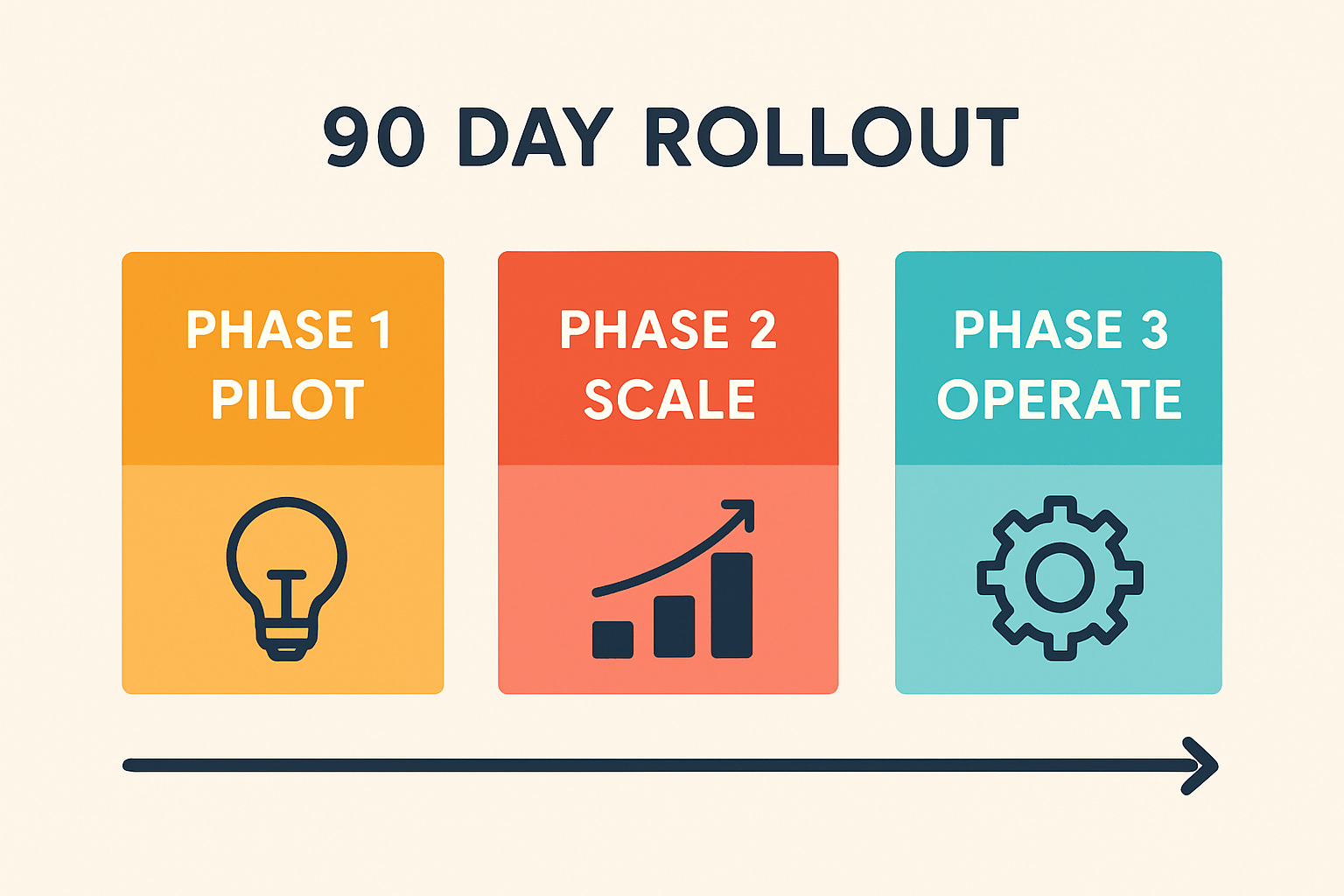
90-Day Rollout Plan for Content Automation
Use this phased plan to pilot, scale, and operationalize.
Phase 1 (Days 0–30): Pilot
Define 1–2 priority clusters and pick 10–15 target keywords.
Stand up workflows: briefs, draft, QA, approvals, publish cadence.
Ship a minimum viable set: 4–6 SEO posts, metadata for 50+ pages, and 1 landing page refresh.
Instrument KPIs: rankings, CTR, scroll depth, and conversions.
Phase 2 (Days 31–60): Scale
Expand to programmatic pages and category copy; add FAQs and comparison pages.
Introduce lifecycle emails and social repurposing for distribution.
Publish 2–3 case studies or proof assets to support sales.
Begin internal linking and schema upgrades across the site.
Phase 3 (Days 61–90): Operate
Optimize: test headlines, intros, and CTAs; prune/redirect thin content.
Govern: finalize style guide, voice profiles, and compliance checklists.
Automate: add scheduled workflows and dashboards for ongoing tracking.
Plan Q2: new clusters and long‑form assets (whitepapers, webinars).
Common Pitfalls to Avoid
Publishing unreviewed drafts: always add human QA for facts, tone, and originality.
Thin, over‑templated pages: differentiate with local proof, examples, and fresh data.
Ignoring search intent: match format and depth to what wins the SERP now.
Skipping citations: link to credible, recent sources to build trust.
One‑and‑done mindset: revisit content with new insights and performance data.
Conclusion and Next Steps
Automate the highest‑ROI assets first—SEO posts, programmatic pages, metadata, and FAQs—then layer in comparison content, lifecycle emails, and proof assets. Enforce governance and human QA, measure what matters, and iterate monthly.
When you’re ready to execute, let SEOsolved do the heavy lifting: competitor analysis, keyword discovery, a tailored content roadmap, and high‑quality, SEO‑optimized articles with citations—often in under 30 minutes. Stat Ranking Today.
FAQ
What are content automation tools?
AI systems that plan, generate, and optimize content using workflows, brand guardrails, and performance data to scale production.
Which content types should I automate first?
SEO posts, metadata, programmatic pages, and FAQs—these compound rankings and conversions fastest.
How do I keep quality high?
Use briefs, source citations, human fact‑checks, plagiarism scans, and style/voice guides before publishing.
Will AI replace writers?
No—AI accelerates research and drafting; experts ensure accuracy, nuance, and brand voice.
How do I measure ROI?
Track rankings, CTR, scroll depth, conversions, assisted pipeline, and hours saved per asset.