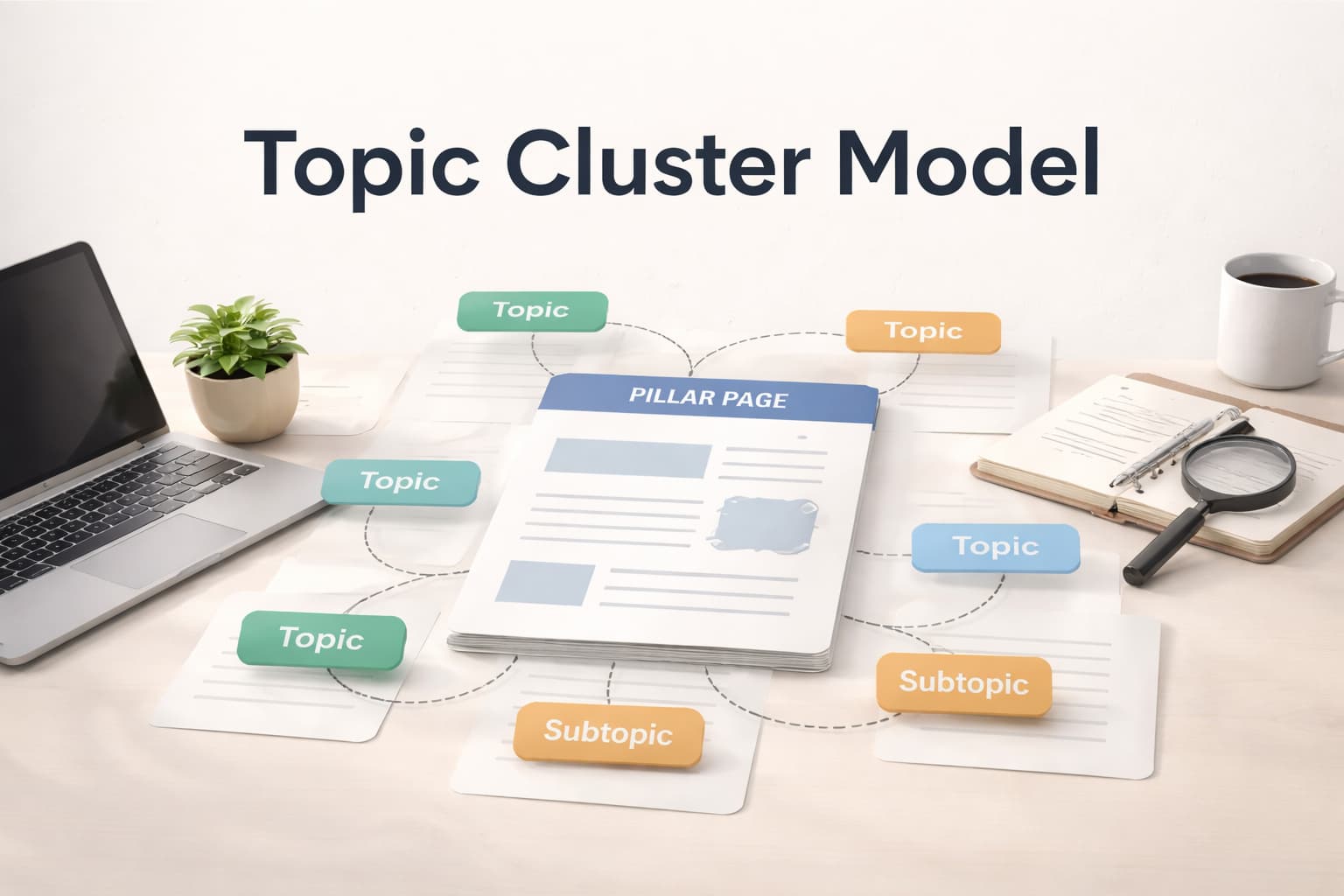
If you want compounding organic growth in 2026, build around topics—not just keywords. The topic cluster model is the most reliable way to earn topical authority, win competitive SERPs, and convert traffic. In this playbook, you’ll learn what topic clusters are, why they work, how to build them fast, and how to automate the hardest parts without sacrificing quality.
Overview: Why the Topic Cluster Model Wins in 2026
This guide is for marketing leaders, founders, and SEO teams who need a scalable content engine that drives rankings, leads, and brand authority. Implementing a modern pillar page strategy with supporting content clusters can improve discoverability, reduce cannibalization, and align your site structure with how search and AI systems interpret topics.
- What you’ll get: a practical framework, best practices, examples, workflows, and a 90-day rollout plan.
- What it solves: scattered content, thin posts that don’t rank, and slow time to value.
- Outcome: clear topical authority, stronger internal link equity, and a content roadmap aligned to demand.
What Is the Topic Cluster Model? (Hub-and-Spoke Explained)
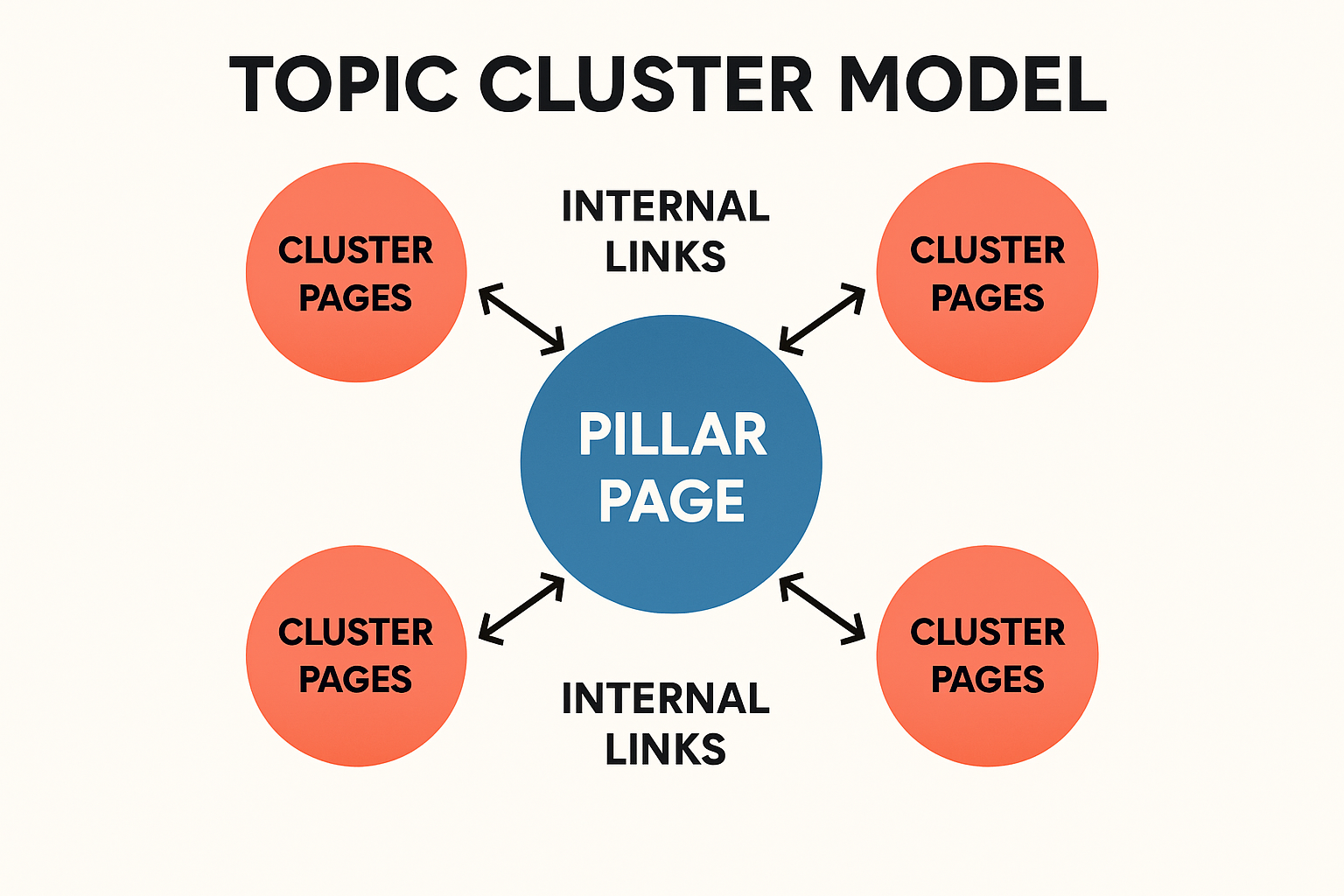
Definition: The topic cluster model is a content architecture where a comprehensive pillar page targets a broad core topic and links to multiple focused articles (cluster pages) that cover subtopics in depth. Each cluster links back to the pillar and to related clusters, building a clear semantic relationship across the site.
Authoritative resources describe this approach as creating sub-topic pages around a central theme to establish authority (Conductor; Yoast). You’ll often hear the hub and spoke content model used interchangeably with topic clusters (Thruuu), where the hub acts as the main resource and spokes dive into subtopics (Digitech).
Core Components: Pillar, Cluster, and Internal Links
- Pillar page: A long-form, high-level resource that frames the topic, defines scope, and links to every subtopic. It attracts broad, competitive queries and intent-rich visitors.
- Cluster pages: Focused articles answering specific questions, use cases, comparisons, or how-tos. They capture long-tail and mid-tail queries and ladder up to the pillar.
- Internal links: Contextual links flow in three directions—hub-to-spoke, spoke-to-hub, and spoke-to-spoke—spreading authority and improving discovery. Strategic internal linking is a ranking lever and UX boost (Visalytica).
Hub-and-Spoke vs. Topic Clusters: What Actually Differs
In practice, most teams can treat these as synonyms (Conductor). The nuance is executional:
| Aspect | Hub-and-Spoke | Topic Cluster |
|---|---|---|
| Primary Object | Hub page + spokes | Pillar + tightly related clusters |
| Linking Pattern | Hub ↔ Spokes | Hub ↔ Spokes + Spoke ↔ Spoke |
| Semantic Emphasis | Navigation & structure | Comprehensive topical coverage |
| Outcome | Better IA | IA plus strong topical authority |
Why Topic Clusters Outperform in Search
Clusters align with how modern search systems interpret meaning and intent, not just strings of keywords. Properly structured content creates machine-interpretable relationships that enhance context and understanding (SMA Marketing). The result: improved rankings, better UX, and durable performance (Rankon; Brafton).
Semantic Coverage and Intent Matching
- Coverage breadth: Clusters cover the entire topic surface area—definitions, comparisons, how-tos, FAQs—signaling expertise to crawlers and satisfying diverse user intents (Siege Media).
- Intent depth: Subtopics map to informational, navigational, transactional, and post-purchase needs. Long-tail pieces often convert better as intent rises (Search Engine Land).
- Keyword economics: Pillars can compete for head terms while clusters win long-tail. Together, they expand total addressable traffic (StoryChief).
Internal Linking: Distributing Authority Across the Cluster
Internal links pass context and equity between related pages, accelerating discovery, consolidating relevance, and helping crawlers map your expertise. Teams that execute structured interlinking report significant traffic and ranking lifts (Content-Whale; Visalytica).
Want a deeper dive into interlinking patterns? See Automated Internal Linking: Scale Topic Clusters in Weeks.
Pillar Page Strategy and Best Practices
Your pillar anchors the cluster. It sets boundaries, establishes definitions, and routes users to best-fit subtopics. Think of it as the index and narrative for the entire topic.
Pillar Page Best Practices: Structure, Depth, and UX
- Structure: Use a clear H2/H3 hierarchy, a floating table of contents, and concise section summaries that link to the relevant spokes.
- Depth: Aim for expansive coverage without duplicating spoke content. Summarize each subtopic in 100–200 words and link out for details.
- UX: Skimmable paragraphs, bulleted lists, and visual cues keep readers engaged. Embed comparison tables and FAQs for snippet wins.
- Trust: Cite authoritative sources and include product screenshots or short use-case examples to demonstrate expertise.
On-Page SEO for Pillars: Titles, Schema, and Links
- Titles & metas: Speak to outcome and intent. Include the core term naturally.
- Schema: Add FAQPage and BreadcrumbList where appropriate. Consider Article and HowTo on relevant spokes.
- Anchors: Use descriptive anchors (e.g., “internal linking strategy”) over generic “read more.”
- CTAs: Place light, contextual CTAs after high-intent sections to convert without disrupting reading flow.
Aligning Pillar Scope with Cluster Coverage
Define exactly what the pillar will and won’t cover. Each subtopic should live on one best page to avoid cannibalization. When overlap is unavoidable, choose a primary owner and reference the other with clear disambiguation.
For templates and layouts, grab Steal This Pillar Page Template + Listicle Framework.
How to Create Topic Clusters: A Step-by-Step Workflow
Use this repeatable process to go from zero to published cluster content efficiently.
1) Choose a Core Topic and Define Search Intent
- List commercially relevant topics tied to your product or service.
- Validate market demand via SERPs, forums, and sales calls.
- Map intents: informational, comparison, solution-aware, product-aware, and transactional.
- Draft a concise topic thesis and boundaries (what belongs vs. what does not).
2) Expand Subtopics and Questions from SERPs and Competitors
- Mine People Also Ask, related searches, and top-ranking outlines.
- Audit competitors to identify gaps you can own quickly.
- Scan communities and support tickets for real phrasing and pain points.
- Group into logical subthemes (definitions, how-tos, comparisons, use cases, troubleshooting).
3) Build a Keyword Map and Content Briefs
- Assign one primary keyword and 3–5 secondaries per page.
- Prevent overlap: if two pages compete, merge or redefine angles.
- Write briefs with audience, intent, outline, FAQs, and required sources/screenshots.
- Include internal link targets and proposed anchors in each brief.
4) Plan Internal Links and Anchor Text
- Hub → Spoke: From pillar summaries to each subtopic.
- Spoke → Hub: From openings or conclusions, reinforce the parent topic.
- Spoke ↔ Spoke: Crosslink sibling pages where tasks overlap or compare.
- Anchor variety: Mix exact, partial, and semantic anchors to avoid monotony.
5) Publish in Logical Batches and Interlink Immediately
- Batch by subtheme (e.g., “setup” or “comparisons”) so crawlers see topical momentum.
- Ship the pillar and first 6–8 spokes together when possible.
- Add all internal links on day one; don’t wait for future sprints.
- Request indexing and monitor logs, impressions, and coverage.
Want a broader AI-driven approach to planning? Read AI SEO Strategy: The 2026 Ultimate Guide to Growth.
Information Architecture for Clusters
Translate your content strategy into clean URLs, breadcrumbs, and navigation. Clear IA improves crawling and helps users understand where they are in the topic.
URL Strategy and Breadcrumbs
- Pattern: Example structure:
/blog/<pillar-slug>/and/blog/<pillar-slug>/<subtopic-slug>/. - Brevity: Keep slugs short, readable, and consistent. Avoid dates unless news-driven.
- Breadcrumbs: Mirror the cluster hierarchy: Home → Blog → Pillar → Subtopic. Mark up with BreadcrumbList schema.
- Canonicalization: Use canonicals to prevent duplicate query-string variants from fragmenting equity.
Navigation and Topic Hubs
- Surface major pillars in your main or mega menu under “Resources” or “Learn.”
- Create hub pages that list all spokes with short summaries and clear CTAs.
- Use related links modules on spoke pages to encourage lateral exploration.
Topic Cluster Examples by Industry
Use these examples as blueprints and adapt them to your product, audience, and sales motion.
SaaS Example: Project Management Software
Pillar: Project Management: The Complete Guide (2026)
- What Is Project Management? (+ Methodologies)
- Agile vs. Waterfall: Pros, Cons, and Use Cases
- Scrum Roles Explained
- How to Build a Project Plan (Templates)
- RACI vs. DACI: Decision Frameworks
- Resource Allocation Strategies
- Project Budgeting 101
- Gantt vs. Kanban: When to Use Each
- PM Software Comparison: Feature Checklist
- Onboarding a PM Tool: A 30-Day Plan
- Risk Management Techniques
- Stakeholder Communication Templates
- Post-Mortems & Retrospectives
Ecommerce Example: Home Fitness Equipment
Pillar: Home Gym Setup: Equipment, Plans, and Results
- Dumbbells vs. Kettlebells: Which to Buy First?
- Treadmill vs. Rowing Machine: Cardio at Home
- Compact Home Gym for Small Spaces
- Budget Home Gym Under $500
- Strength Programs for Beginners
- HIIT Workouts with Minimal Gear
- How to Maintain Your Treadmill
- Workout Mats: Thickness and Grip Guide
- Foam Rollers: Benefits and Routines
- Buying Guide: Adjustable Dumbbells
- Exercise Bike Setup & Calibration
- Accessory Storage Ideas
Local Services Example: HVAC Company
Pillar: HVAC Basics: Heating, Cooling, and Indoor Air Quality
- AC Repair vs. Replacement: Cost and Lifespan
- Seasonal HVAC Maintenance Checklist
- Heat Pump vs. Furnace: Climate Considerations
- SEER Ratings Explained
- Air Filter Types and Change Schedules
- Smart Thermostat Setup Guide
- Ductless Mini-Splits: Pros and Cons
- Indoor Air Quality: HEPA, UV, and Filters
- Local Service Areas and Response Times
- Rebates and Financing Options
- Emergency HVAC: What to Do First
Best Pillar Page Examples: What Winners Have in Common
Across standout pillars, we see repeatable patterns that you can replicate.
Depth and Comprehensiveness Without Redundancy
- Summarize each subtopic and defer deep dives to spokes.
- Use comparison tables to clarify decisions quickly.
- Prioritize tasks and frameworks that readers can apply immediately.
Scannability: TOC, Visual Cues, and Smart Subheads
- Sticky table of contents that updates as readers scroll.
- Short paragraphs and bullets under 80 words where possible.
- Visual patterns: checklists, timelines, and iconography to reduce cognitive load.
Link Architecture That Guides Users and Crawlers
- Place spoke links near the top of each relevant subsection.
- Use related reading modules mid-article and at the end to encourage depth.
- Connect semantically related spokes laterally to avoid dead ends.
For semantic strategy details, read Semantic SEO: The Fast Track to Unshakable Authority.
Production Workflow: Quality at Scale
Scaling clusters without sacrificing quality requires standardized briefs, editorial QA, and lightweight governance.
Briefs, Reviews, and Fact-Checking
- Create a shared brief template covering intent, outline, internal links, and sources.
- Use SME reviewers for technical accuracy and brand tone.
- Fact-check claims against primary sources; add citations inline.
- Run pre-publish checklists: originality, linking, schema, accessibility, and on-page SEO.
Media, Examples, and Source Citations
- Insert simple diagrams and tables where they unlock understanding.
- Use screenshots or short gifs for product-led steps, when relevant.
- Cite credible sources to strengthen E-E-A-T and win trust.
Measurement: KPIs, Diagnostics, and Iteration
Measure what matters so you can iterate quickly and compound gains across the cluster.
KPIs to Track: Coverage, Rankings, and Engagement
- Coverage ratio: percent of planned cluster pages that are live and interlinked.
- Weighted rank: average positions weighted by search volume and intent.
- Discovery metrics: impressions and crawl stats for new URLs.
- Engagement: scroll depth, time on page, and related link CTR.
- Pipeline: assisted conversions, demo requests, or add-to-cart from cluster paths.
Fixing Cannibalization and Thin Content
Use this decision flow:
- Two pages, same intent, similar keywords? Merge into the strongest URL and 301 the other.
- Two pages, different intent? Clarify titles and intros; add disambiguating links.
- Thin page with impressions but no clicks? Expand content, improve title/meta, add FAQs.
- No impressions? Reposition the angle, re-map keywords, and strengthen internal links.
Automating the Heavy Lifting with SEOsolved
Manual cluster planning can take weeks. Automation accelerates research, mapping, and production—without skipping expert review.
What SEOsolved Automates
- Analyzes competitors to uncover content gaps and ranking signals.
- Discovers hundreds of ranking keywords and groups them into a tailored roadmap.
- Generates high-quality, SEO-optimized articles with credible sources in as little as 30 minutes.
- Outputs a clear plan for a pillar and its spokes so you can publish in confident batches.
Teams using consistent clustering see measurable improvements in rankings and traffic (Content-Whale). Some report that having 10+ clusters on a topic correlates with 20–50% ranking gains (Visalytica).
Where Automation Fits vs. Manual Work
- Automate: competitor analysis, keyword clustering, content roadmap, first-draft article generation.
- Manual: SME validation, brand voice tuning, proprietary data, and final QA.
From Strategy to Live Articles—Fast
- Analyze market and competitors.
- Auto-generate a pillar-plus-spokes roadmap.
- Generate articles.
- Light edit for voice and accuracy.
- Publish, interlink, and request indexing.
Stat Ranking Today — ship your first cluster in days, not months.
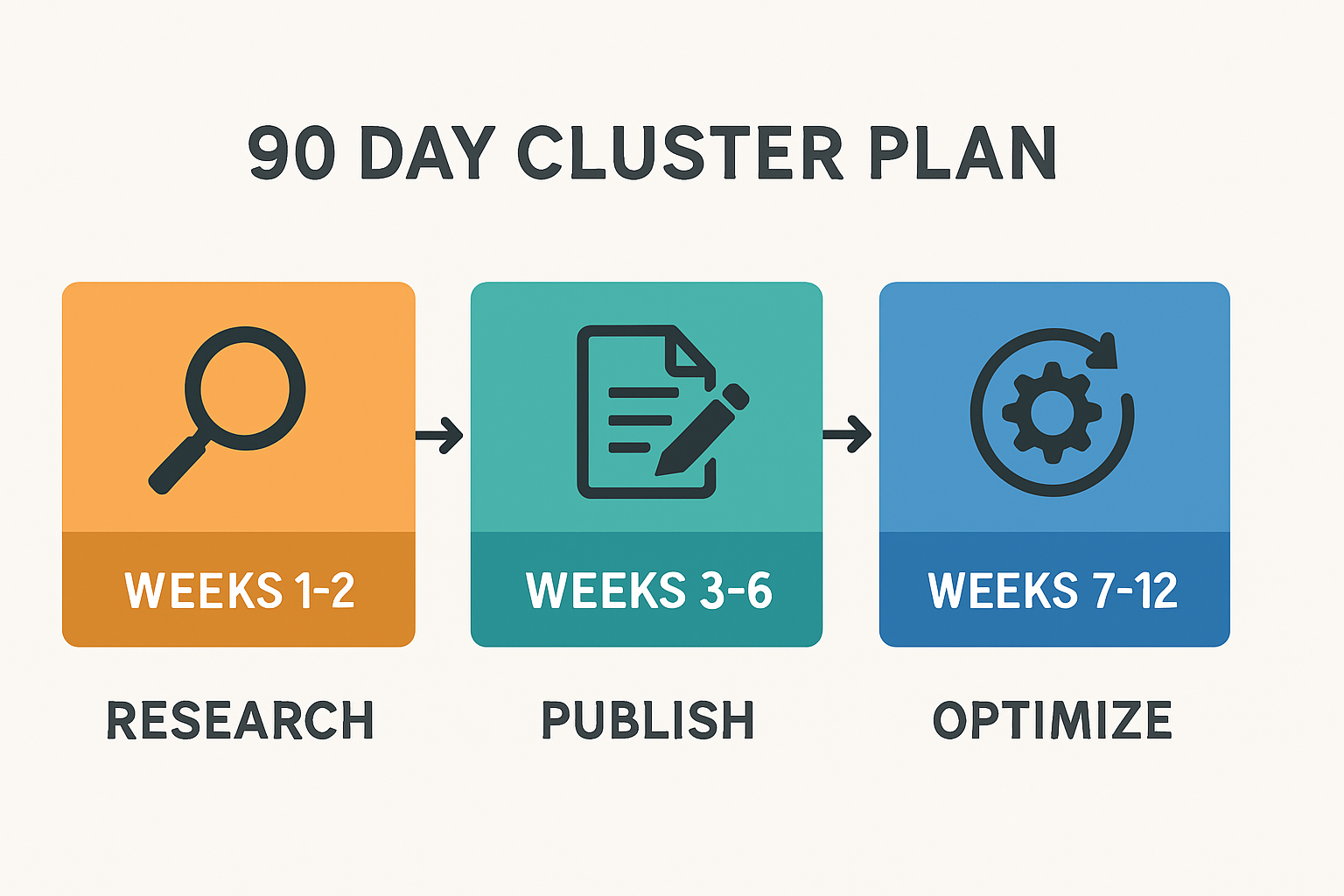
90-Day Rollout Plan for a New Cluster
Here’s a realistic timeline to launch a pillar plus 12–24 spokes and gain traction.
Weeks 1–2: Research, Mapping, and Briefs
- Pick the core topic and define success criteria.
- Cluster keywords and finalize the sitemap for pillar + spokes.
- Draft briefs for every page, including internal link plans.
- Prep design components and CTA patterns once, reuse everywhere.
Weeks 3–6: Produce Pillar and First 6–8 Spokes
- Publish the pillar and initial batch together.
- Interlink all pages immediately; add related links modules.
- Request indexing and monitor coverage in Search Console.
- Collect early behavior data: scroll depth, anchor CTR, exit pages.
Weeks 7–12: Complete Cluster, Optimize, and Expand
- Publish remaining spokes and add FAQs based on PAA and support chats.
- Refine anchors; add spoke-to-spoke links where readers branch.
- Identify content gaps and queue v2 expansions or net-new spokes.
- Repurpose into email series, slides, and short videos for distribution.
FAQs: Topic Cluster Model and Pillar Pages
How many pages belong in a strong cluster?
Start with 12–24 pages depending on topic depth and competition. Include one pillar plus subtopics that fully cover definitions, how-tos, comparisons, and FAQs.
Should I publish the pillar first or last?
Publish the pillar with your first batch of spokes. The pillar frames context; the spokes provide depth so crawlers and users see a complete experience.
Do I need separate clusters for each audience segment?
Create separate clusters when intents, jargon, or solutions differ by persona or use case. Otherwise, use segmented sections within a single pillar.
How do I prevent cannibalization across spokes?
Assign one primary keyword per page, clarify distinct intents, and interlink with disambiguating anchors. Merge overlapping pages and 301 the weaker URL.
What on-page elements help pillars win snippets?
Use concise definitions, numbered steps, comparison tables, and FAQ schema. Keep paragraphs short and place answers high on the page.
Conclusion and Next Steps
Topic clusters align your content with how users search and how algorithms evaluate expertise. Build a strong pillar, cover the full landscape with focused spokes, and interlink intelligently. Measure coverage, iterate on intent gaps, and scale with a repeatable workflow.
Kickstart with Automation: SEOsolved
SEOsolved analyzes competitors, discovers ranking keywords, produces a tailored content roadmap, and generates high-quality articles in as little as 30 minutes—so you can launch clusters fast and focus your team on expert review.
Call to Action
Ready to publish your first cluster? Stat Ranking Today. Then use our guides on competitor analysis and pillar page templates to keep shipping.