Links still move markets. In 2026, the fastest-growing sites pair a reliable backlinks checker with repeatable workflows to find, qualify, and win links—without guesswork.
This guide shows you how to pick the right backlink checker tool, evaluate link quality, and run step-by-step audits and outreach. You’ll also see how to combine insights with SEOsolved to create link-worthy content at scale.
What a Backlinks Checker Is—and Why It Matters in 2026
Definition: A backlinks checker is a platform that crawls the web to find pages linking to your site (or any site) and reports link data—referring domains, authority, anchors, follow/nofollow, context, and changes over time.
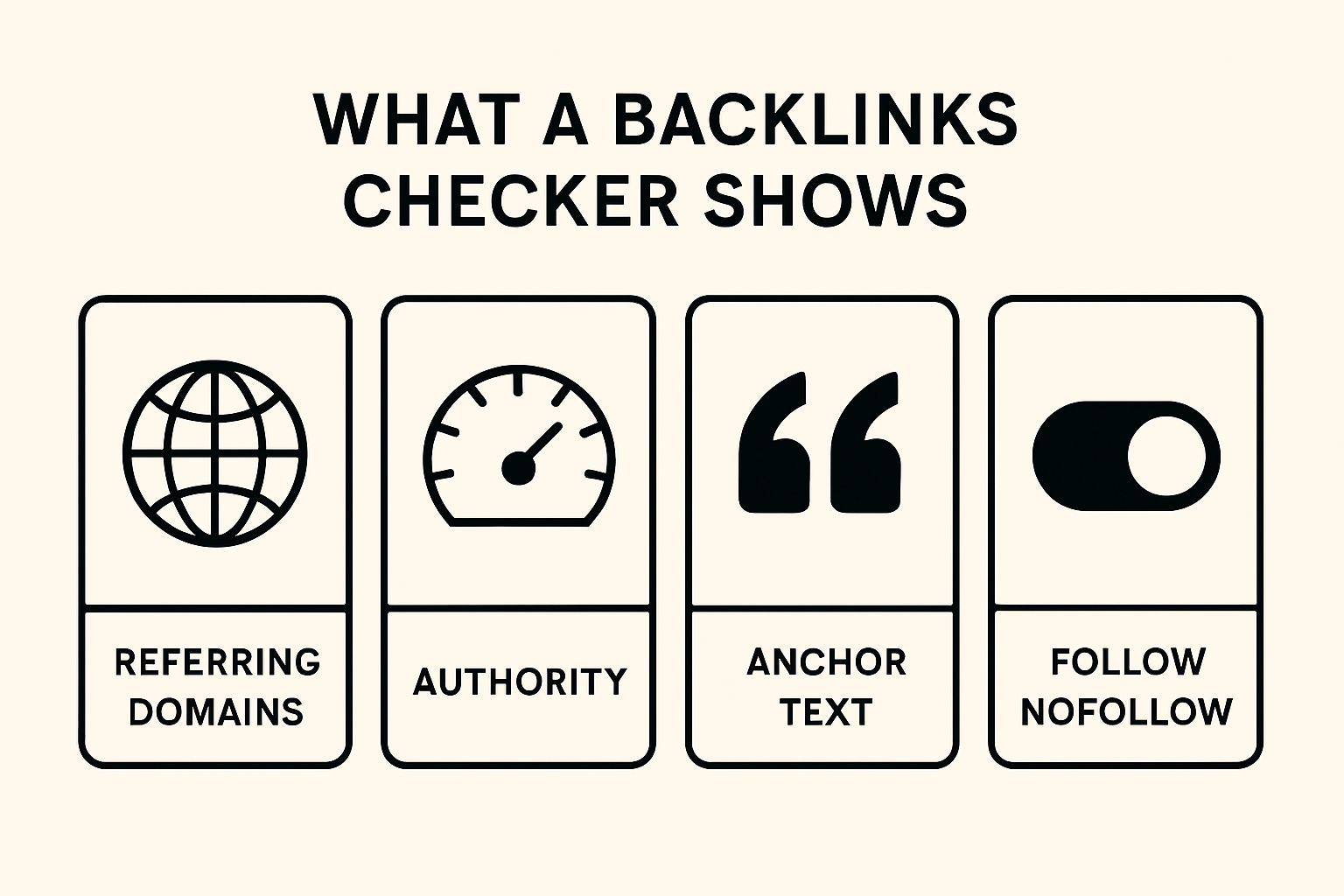
Modern backlink tools double as a website backlink analyzer and competitive intelligence suite. Expect a solid backlink explorer to surface:
- Referring domains and IP/class-C diversity
- Authority metrics (e.g., DA/PA, DR, Authority Score)
- Anchor text distribution and link context
- Follow vs. nofollow, UGC, sponsored attributes
- New, lost, and broken links trends
- Spam signals and toxicity risk
- Top-linked pages and link velocity
Why it matters: With a reliable backlink checker tool, you can benchmark against competitors, uncover link gaps, protect against spam, and prioritize the highest-value prospects for outreach—all key to sustainable rankings.
How to Evaluate Backlink Quality: Metrics That Matter
Not all links are created equal. Use these core signals to check backlink quality and weigh both value and risk.
- Referring domains: Unique domains beat raw link counts. Favor growth from topical, trusted sources.
- Authority: Directional metrics like DA/PA (Moz), DR (Ahrefs), and Authority Score (Semrush) indicate potential “link equity.” Mix high-, mid-, and niche-authority links for a natural profile.
- Trust vs. quantity: Trust Flow and Citation Flow balance quality and volume. Higher trust relative to citations is healthier.
- Relevance: Category and content alignment (topic match) outperform off-topic links—even from bigger sites.
- Anchors: Keep exact-match anchors under control; prioritize branded, URL, and topical variation.
- Placement: Contextual in-content links near relevant text beat footer/sidebar or author bio links.
- Traffic & index: Links from pages that rank and get organic visits tend to pass more value.
- Follow attributes: A natural mix is fine; dofollow earns equity, while nofollow/UGC/sponsored provide discovery and diversity.
- Risk signals: Spammy anchors, scraped content, link farms, foreign TLD clusters, or massive outbound links warrant caution.
Helpful references on authority and relevance include guidance on DA/PA and Spam Score, Trust Flow, and topic alignment from respected industry resources (see citations below).
Best Backlink Checker Tools in 2026: The Short List
Here’s the quick take on today’s standouts before we dive deep:
| Tool | Best For | Free View | Standout Strength |
|---|---|---|---|
| Ahrefs | Backlink accuracy and competitor research | Yes (sample) | Large, fresh link index; Link Intersect |
| Semrush | All-in-one SEO with strong link auditing | Yes (limited) | Toxicity scoring and domain-level comparisons |
| Moz Link Explorer | Clear DA/PA metrics and Spam Score | Yes (limited) | Easy-to-read authority and spam indicators |
| Ubersuggest | Budget-conscious teams | Yes (daily limits) | Simple reports and quick filters |
| Seobility | Free checks and lean reporting | Yes (free checker) | Complementary on-page/site features |
| Small SEO Tools | One-off free checks | Yes (free) | Basic discovery; verify with a second source |
| Google Search Console | Your own site’s links | Yes | Reliable first-party data (but limited scope) |
Deep Dive: Tool-by-Tool Comparisons
Below, we compare index size/freshness, accuracy, features, workflow fit, and pricing directionally to help you choose confidently.
Ahrefs Backlink Checker
Ahrefs remains a favorite for sheer backlink coverage and speed. Site Explorer surfaces deep link data—anchors, context, link intersect, and historical changes. Domain Rating (DR) is a helpful, directional authority metric. Free users get a limited sample; paid unlocks full exports, alerts, and advanced filters.
Best for: teams prioritizing competitor reverse-engineering, broken link building, and accurate discovery at scale.
Semrush Backlink Analytics
Semrush’s database powers robust Backlink Analytics plus a well-known toxicity scoring system. It’s strong for all-in-one workflows: keyword tracking, competitive comparisons, and link audits. Free view is limited; paid tiers add broader exports, historical data, and more frequent crawls.
Best for: marketers who want backlinks plus rank tracking, site audits, and reporting under one roof.
Moz Link Explorer
Moz popularized DA/PA and offers an approachable link explorer with Spam Score. It’s a clean way to sanity-check authority and risk, especially for teams that want readable metrics and a gentle learning curve. Free limits apply; paid unlocks deeper analysis.
Ubersuggest Backlinks
Ubersuggest provides practical backlink insights on a budget: top links, referring domains, and simple filters. Daily caps exist on free plans; paid plans loosen limits and add projects and historical data. Great for startups doing light prospecting and validation.
Seobility Backlink Checker
Seobility’s free checker is useful for quick snapshots and lean reporting. Pair it with its on-page tools for a low-cost baseline view of link health before you upgrade to a larger index.
Small SEO Tools Backlink Checker
Free and fast for one-off lookups. Treat results as directional—validate important findings in a second tool before making decisions.
Google’s Perspective: Where “Google Backlink Checker” Fits
There’s no official public “Google backlink checker” for any site on the web. However, Google Search Console offers a Links report for your own property—valuable first-party data that shows top linking sites, pages, and anchors. Use it alongside third-party tools to fill coverage gaps and triangulate risk.
Related reading: explore alternatives to all-in-one SEO suites and our 2025 SEO tools roundup for a broader stack perspective.
Free Backlink Checker Options: What You Get (and Don’t)
Free tools are great for quick checks, but they have limits.
You’ll typically get:
- Sampled backlink lists and a handful of referring domains
- Basic authority and anchor insights
- Occasional new/lost link snapshots
You usually won’t get:
- Full index coverage and historical trends
- Reliable toxicity scoring and advanced spam filters
- Bulk exports, intersect, or alert automation
Recommendation: start with a free SEO backlink checker plus GSC for first-party data. Upgrade to a paid index when you need dependable coverage, alerts, and exports to run real outreach at scale.
Step-by-Step: How to Check Your Backlinks the Right Way
Use these workflows to audit your domain, a single URL, and a competitor—and know what to do next.
Domain-Level Audit
- Pull a fresh export of all backlinks from your preferred tool and from GSC.
- De-duplicate by domain; calculate referring domain growth over 90–180 days.
- Segment by authority (DA/DR bands), topic, and follow/nofollow.
- Flag risk: spammy anchors, low-quality TLD clusters, sitewide footers, and redirect chains.
- Prioritize: reclaim lost high-value links; plan outreach to replicate competitor links.
- Report: track ref domains, link velocity, and top-linked pages monthly.
Tip: If you’re new to benchmarking, this competitor SEO analysis playbook can help you set realistic targets.
URL-Level Audit (A Single Page)
- Run a URL backlink checker for your target page.
- Check anchor variety and the linking page’s topical match.
- Validate placement: in-content links near relevant paragraphs beat sidebars.
- Triage: keep, upgrade, or replace; look for internal linking improvements to amplify equity.
Competitor Snapshot
- Export a competitor’s referring domains and top-linked pages.
- Use link intersect to find domains linking to them but not to you.
- Score prospects by relevance, authority, and feasibility (resource pages, guest posts, unlinked mentions).
- Build a target list and craft personalized outreach angles.
Deep dive further with our guide to competitor keyword research to align topics with link intent.
Find New, Lost, and Broken Links—Then Act
Tracking change is where a backlink scanner and alerts pay off. Fresh links support growth; lost and broken links reveal quick wins.
Track New Mentions
- Set weekly alerts for check new backlinks and brand mentions.
- Sort by authority and relevance; tag outreach opportunities (e.g., to upgrade a non-linked mention).
- Update a simple “net new RD” KPI in your dashboard.
Identify Lost and Broken Opportunities
- Filter for lost links from authoritative, relevant domains.
- Spot 404s and redirect chains with a broken backlink checker.
- Prioritize recoveries first; then pursue replacements via fresh content or alternative URLs.
Reclaim with Outreach
For lost or broken links, send concise, value-first emails. Example:
- Subject: Quick fix for your [article title]
- Body: “We noticed a broken link to [old URL]. Here’s the updated resource that covers [benefit]. Happy to share a summary if helpful.”
Toxic and Spammy Links: Audit and Cleanup
Healthy profiles can absorb a few bad links, but concentrated patterns need action. Use your tool’s spammy backlinks checker or toxicity filters to triage.
Detect and Prioritize Risk
- Anchors: Overuse of exact-match money terms.
- TLDs/Footprints: Clusters from unrelated ccTLDs, auto-generated directories, or PBN-like footprints.
- Link neighborhoods: Pages linking out to dozens of unrelated sites.
- Traffic signals: Linking pages with no organic visibility.
Set thresholds that trigger review (e.g., sudden spikes of low-trust links). Keep a change log of what you removed, requested, or disavowed.
Removal, Outreach, and Disavow
- Attempt removals: contact webmasters with the precise URL list.
- Neutralize exposure: improve internal linking to stronger pages; publish better replacements.
- Disavow selectively: if removals fail and risk is material, submit a domain-or-URL disavow file via Search Console. Document your rationale.
A light, periodic free backlink audit keeps issues small and contained.
Bulk and Advanced Backlink Research
Scale prospecting by batching tasks and leaning on exports.
Bulk Domain and Metric Checks
- Run prospect lists through bulk DA/DR checks to triage fast.
- Sort by relevance first, then by authority; avoid chasing metrics without context.
- Save “A-list” domains for your best assets and most personalized outreach.
Anchor Text and Keyword Patterns
- Chart anchor distributions by type (brand, URL, partial, exact).
- Spot over-optimization and diversify toward branded/URL anchors.
- Use a keyword backlink checker view to reveal topical gaps you can fill.
Backlink Intersect and Prospect Mining
- Use intersect to find domains linking to multiple competitors but not to you.
- Leverage a backlink extractor tool to pull outbound links from niche lists and resource pages.
- De-duplicate, enrich with relevance notes, and route to outreach.
Workflows, Extensions, and Exports
Little workflow upgrades compound into big time-savings.
Browser Extensions and Shortcuts
- Use a backlink checker Chrome extension or DA/PA checker to gauge pages on the fly.
- Create bookmarks for your most-used filters (e.g., 40+ DA, contextual, dofollow).
- Set keyboard shortcuts for inspecting anchors and following links in a new tab.
Data Exports and Reporting
- Standardize CSV/Sheets dashboards: Referring domains, new/lost ratio, top-linked pages, and anchor mix.
- Slice by campaign and map to KPIs: rankings, organic clicks, assisted conversions.
- Archive monthly snapshots for trend analysis and quarterly reviews.
If technical SEO is on your roadmap, bookmark our guide to the best SEO audit tools for complementary diagnostics.
Measure ROI: KPIs That Tie Links to Revenue
Link-building is only as good as its business impact. Measure leading and lagging indicators:
- Leading: Net new referring domains, link velocity, percent contextual dofollow, average linking page traffic.
- Middle: Ranking improvements for target pages/keywords; impressions; click-through rate.
- Lagging: Assisted conversions, pipeline influenced, revenue from organic sessions hitting linked pages.
Roll up KPIs into a monthly total backlink checker report: what you added, what you recovered, and how target pages moved.
How SEOsolved Accelerates Link-Winning Content
Backlinks compound fastest when you publish assets people actually want to cite. That’s where SEOsolved shines.
- Eliminates guesswork: analyzes competitors and discovers ranking keywords to map content with proven link intent.
- Builds a tailored content roadmap: prioritizes topics aligned to your link gaps and business goals.
- Generates high-quality articles fast: creates SEO-optimized content with credible sources in as little as 30 minutes.
- Scales without headcount: ship more linkable guides, studies, and comparisons with consistent quality.
Consider this workflow: use your backlink analyzer to find intersect opportunities; then feed those themes into SEOsolved to produce data-backed resources and outreach briefs. Result: faster publication, higher acceptance rates, and durable rankings.
Stat Ranking Today with SEOsolved.
Turn Competitor Link Gaps into Topics
Pull competitor backlink gaps and top-linked pages, then import those themes into SEOsolved. The platform groups opportunities by search intent and difficulty so you can prioritize “link magnets” like benchmarks, calculators, or teardown studies. See our Competitor SEO Analysis Playbook for hands-on tactics.
Generate Linkable Assets in Minutes
SEOsolved can generate high-quality SEO-optimized articles with citations from credible sources, saving dozens of research hours per post. For example (hypothetical), a B2B SaaS team replaced a month-long whitepaper process with three SEOsolved guides published in one week, earning fast mentions from niche blogs.
Playbook: Combine Your Backlinks Checker with SEOsolved
- Research: run intersect, topic analysis, and anchor audits in your preferred checker.
- Plan: feed themes into SEOsolved to build a prioritized content roadmap.
- Produce: generate source-backed guides and summaries in 30–60 minutes.
- Promote: personalize outreach using your prospect notes; track responses.
- Iterate: export new/lost links monthly and refine topics with SEOsolved.
Want an end-to-end system? Stat Ranking Today.
Quick Picks by Use Case
Short recommendations to match budgets and goals.
Best Free Option
Pair Google Search Console with Seobility or Small SEO Tools for quick checks. Upgrade as soon as you need consistent coverage, historicals, and exports.
Best for Agencies
Ahrefs or Semrush for robust reporting, exports, and multi-site workflows. Use standardized dashboards to streamline client updates.
Best for Startups on a Budget
Ubersuggest plus GSC for light prospecting; validate important targets in a second tool before outreach.
Best for Deep Competitor Research
Ahrefs for intersect and fresh discovery; Moz for quick DA/Spam checks as a second opinion.
Best for Bulk Checking
Use batch DA/DR checkers and CSV exports; combine with your CRM or Sheets for triage and tagging.
FAQ: Backlinks Checker and Analysis Tools
Is there an official Google backlink checker?
No. Google Search Console’s Links report shows backlinks for your own site only. Third-party tools provide broader web coverage.
What’s the best free backlink checker?
For quick, free snapshots: GSC plus Seobility or Small SEO Tools. For serious campaigns, upgrade to a paid index for coverage and exports.
Do “backlink generator” tools work?
Automated link schemes risk penalties and low-quality links. Safer wins come from content-led outreach, digital PR, and unlinked-mention reclamation.
Which matters more—DA or DR?
Neither is absolute. Use DA/DR as directional signals alongside relevance, traffic, anchors, and placement.
How often should I audit my backlinks?
Small sites: monthly scan, quarterly deep-dive. Larger sites: weekly alerts, monthly reports, quarterly cleanup.
Want to outpace rivals? Combine disciplined link research with a content engine built for scale. Stat Ranking Today.